Washington usually introduces itself through its monuments. The Capitol dome, the Lincoln Memorial, the obelisk, the long museum row along the Mall. All of it magnificent, all of it entirely aware of being magnificent.
Then there’s the other Washington, a few blocks northwest, where the city stops declaring and starts gossiping.
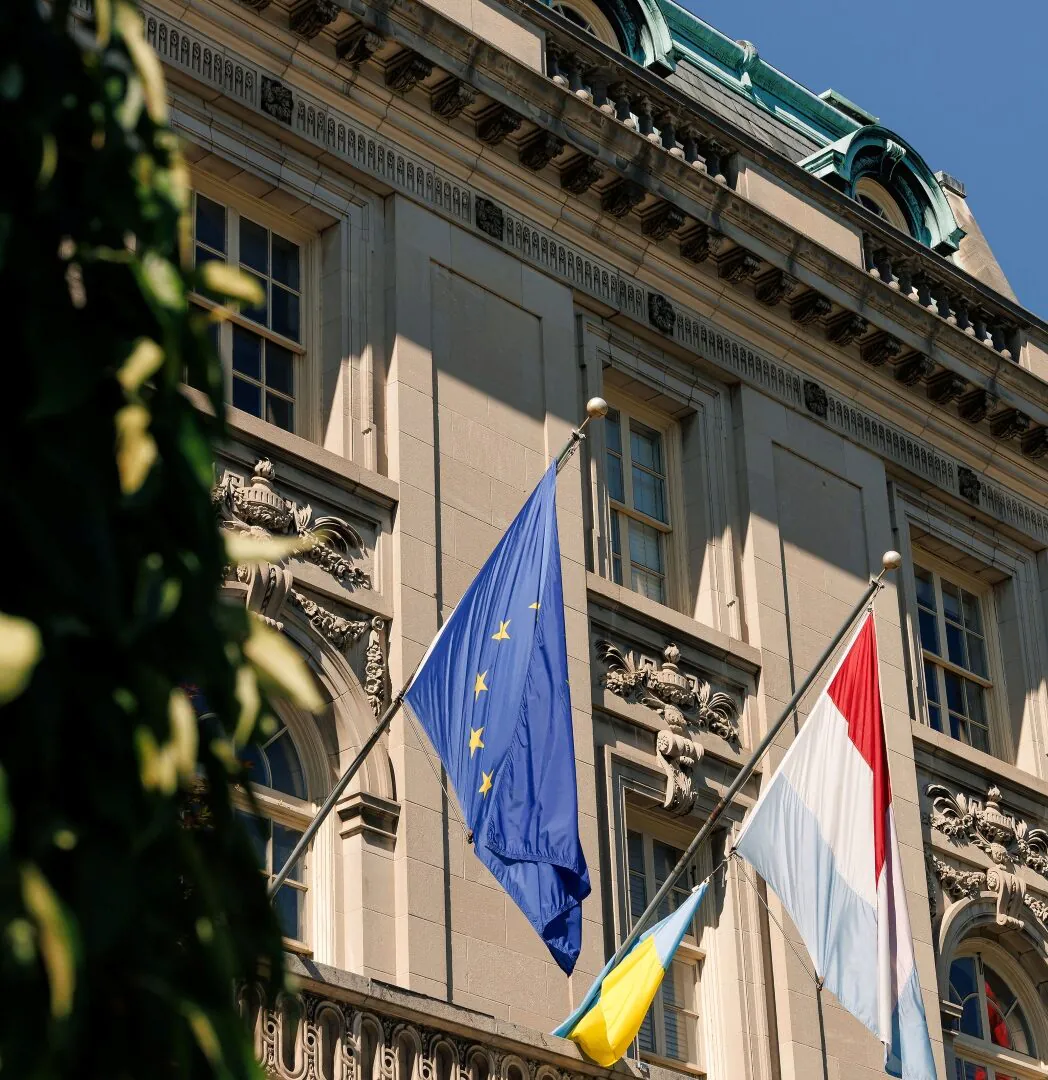
Around Dupont Circle, Scott Circle, and Embassy Row, mansions stand shoulder to shoulder with embassies flying flags from countries you’d struggle to place on a map. Art collections occupy houses that were built for parties. Bookshops, cafés, and galleries run down the side streets. And a single unhurried afternoon can take you past diplomatic residences, Gilded Age architecture, a marble fountain by the man who sculpted Lincoln, and at least one restaurant patio that will successfully derail your plans.
Alice Roosevelt held court here for close to sixty years. They called her the Duchess of Dupont Circle, and she earned it.
From The Beacon, just off Scott Circle, all of it starts at the front door.
Dupont Circle is a neighborhood and, confusingly but charmingly, an actual traffic circle. The Dupont Memorial Fountain sits at the middle of it, doing the social work.
It was designed by the sculptor Daniel Chester French and the architect Henry Bacon — the same pairing behind the Lincoln Memorial, working here at conversational scale rather than national scale. The park around it is still the neighborhood’s living room: people reading, arguing, playing chess, waiting for someone who is late, watching Washington circle past them at thirty miles an hour.
That’s the difference between this and downtown. Serious institutions are certainly here. So is ordinary life, in full view.
Walk the circle once before committing to a direction. Connecticut Avenue runs into the busiest commercial stretch. The side streets go quiet and residential almost immediately, lined with townhouses that have seen things. Restaurants, bars, boutiques, and galleries are scattered rather than clustered, which is exactly why this neighborhood punishes rigid scheduling and rewards curiosity.
Follow Massachusetts Avenue southeast for a few minutes and the neighborhood changes key.
Dupont does the socializing. Scott Circle, its more buttoned-up neighbor, handles the serious business. 16th Street runs south from the circle about six blocks to the White House, K Street’s offices and Farragut Square sit a short walk below, and the avenues around it are lined with embassies, historic mansions, and the kind of addresses that look good on letterhead. It’s where the capital’s working week likes to be seen.
The circle itself has three bronze residents. General Winfield Scott has sat on horseback at the center since 1874, in a statue cast from cannons captured during his Mexico City campaign. Daniel Webster holds forth, mid-oration, on the west side. Samuel Hahnemann, the founder of homeopathy, sits in a curved granite exedra on the east, dedicated in 1900 with President McKinley in attendance. The Embassies of Australia and the Philippines both face the circle.
And the general’s horse carries the neighborhood’s best piece of gossip. The sculptor, Henry Kirke Brown, originally modeled a mare. Veterans objected that a general of Scott’s standing should not be seen riding one, and the anatomy was duly revised. Alice, who never met a scandal she couldn’t improve, would have approved.
This is our corner. The Beacon sits just off the circle on Rhode Island Avenue — power in one direction, pleasure in the other. Alice spent sixty years refusing to choose between the two. From here, you won’t have to.
From Scott Circle, one of the city’s great walks unfolds along Massachusetts Avenue.
Embassy Row runs for roughly two miles, lined with diplomatic missions, historic estates, and architecture that shifts nationality every hundred yards. Destination DC points to the Embassy of Australia near Scott Circle as a natural starting point — which is to say, a few steps from our front door — from where the avenue carries on through Dupont Circle and northwest into the grandest residential blocks in the District.
There’s no single attraction to find, which is the point. The pleasure is in the sequence — gates, gardens, flags, façades, one country handing off to the next.
Most of these buildings began as private houses during Washington’s late-nineteenth and early-twentieth-century boom, built by people with more money than restraint, before they became embassies and ambassadors’ residences. It gives the avenue a richness you won’t find anywhere else in the city, and a slight air of secrets being kept behind good windows.
Alice’s own house stood along this avenue. It was, by contemporary accounts, cluttered with animal skins and hunting trophies from her father’s expeditions, a lifetime of mementos and photographs, and everything else buried under newspapers, books, and cats. Six decades of the city’s most consequential dinner conversations happened inside it.
Don’t try to complete the route. Walk a few blocks, turn around when something better occurs to you, and come back another day. From The Beacon, that works: out along Massachusetts Avenue in the morning, back for an hour that belongs to nobody, then out again when the neighborhood changes shift for the evening. Alice’s guide to DC has more of the route.
Dupont’s cultural life extends well past diplomacy.
At 1600 21st Street NW, The Phillips Collection describes itself as America’s first museum of modern art, and it behaves nothing like the institutions on the Mall.
Renoir’s Luncheon of the Boating Party hangs here, along with the Rothko Room, Jacob Lawrence’s Migration Series, and a collection that moves across most of what modern art attempted. It’s currently open Tuesday to Saturday, 10 a.m. to 5 p.m., and Sunday from 11 a.m. to 5 p.m., closed Mondays, with advance reservations encouraged.
The scale is the charm. It was a private house before it was a museum, and it still feels like one — which suits a neighborhood built on people showing you their things.
Afterward, don’t leave immediately. The streets around 21st are part of the visit.
The neighborhood gained something substantial in 2026.
The National Geographic Museum of Exploration, at 1600 M Street NW, offers roughly 100,000 square feet of interactive space devoted to exploration, photography, storytelling, science, and the natural world. It runs from 9 a.m. to 8 p.m., last entry at 7 p.m., with timed tickets and assigned arrival windows.
Inside: immersive displays, artifacts, photography, and technology tracing National Geographic’s long habit of documenting the planet. There’s a global food hall, Explorers Eatery, for when the expedition needs provisioning.
It sits a couple of blocks from Scott Circle and our Rhode Island Avenue address, and it makes the case for this neighborhood neatly. You can build a serious museum trip here without spending every day on the National Mall.
After several hours on foot, coming back somewhere good stops being the end of the day and becomes part of it.
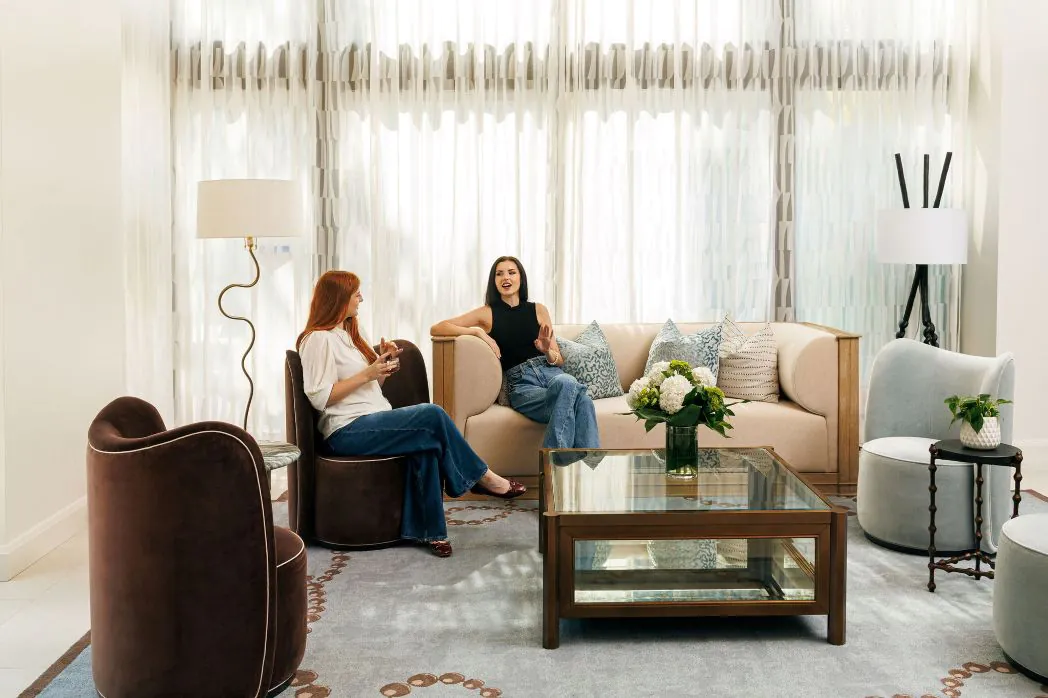
Our rooms and suites were designed on residential logic, in deliberate contrast to the chill of the competition. Choose an intimate Standard King, or move up through the Longworth Junior Suites and the Wild Rose one-bedrooms with their separate living rooms. The Monument Suite gives you 560 square feet, panoramic views, a kitchenette, and a bath worth the detour.
Inside, the details are pitched at exactly the moment you’ll appreciate them: Fili d’Oro linens, Frette robes and slippers, blackout shades, a mini refrigerator, complimentary bottled water, a Lavazza espresso machine, Tea Forté tea, a Marshall Bluetooth speaker, a SNOOZ sound machine.
Beyond the room there’s complimentary WiFi, concierge service, valet parking, and a fitness center with Life Fitness equipment, Peloton bikes, free weights, yoga mats, resistance bands, and a stretch zone.
Which, after two miles of Massachusetts Avenue, may suddenly hold considerable appeal.
Scott Circle is a base as much as a destination.
Downtown, the White House, Georgetown, Logan Circle, and the National Mall are all comfortably within reach, and the Metro does the rest — the National Geographic museum names Farragut North on the Red Line and Farragut West on the Blue, Orange, and Silver lines as its nearest stations, which tells you how well connected this part of the city is. In town for meetings? The same geography means your commute to K Street is a walk, and your evening in Dupont is a shorter one.
On a longer stay, that flexibility earns its keep. Spend one day entirely on foot around Dupont. Give another to the Smithsonian. Hand an evening to a different neighborhood altogether.
Then come back to the part of Washington where walking out of the door is itself the activity.
Some of Washington demands scheduling. Timed tickets, tours, tables, the big-ticket attractions — book them.
Dupont and Embassy Row ask for the opposite. Leave gaps between reservations. Sit at the fountain longer than you meant to. Follow Massachusetts Avenue until a building stops you. Walk into a museum because it happens to be there. Choose the restaurant with the better patio over the one with the better reviews. Take the residential street home instead of the fast one.
That freedom is the whole argument for staying here. From our corner of Scott Circle, Washington’s international, artistic, architectural, and thoroughly everyday sides are all a short walk apart. Our rooms give you somewhere excellent to return to. The neighborhood will keep giving you reasons to leave it again.
In a city obsessed with destinations, the walk between them is frequently the best part.